Why Track Your Workouts? 9 Reasons It's the Difference Between Guessing and Growing


Track your workouts because the alternative is guessing, and your memory is worse at this than you think. Ask yourself why track your workouts and the honest answer is short: a log turns "I think I did about 60 kilos last week" into "I did 62.5kg (138 lb) for 6, so today I beat it." That is the whole point. Not a diary you keep for its own sake, but a record that hands you a decision every time you walk in. Here are 9 reasons it works.
The honest truth: untracked training is just guessing
Reason one: your memory rounds up. You remember the weight you were proud of, not the reps you actually got. You will swear you hit 8 across all three sets when the log says 8, 6, 5. Over a month that fuzz piles up, and you end up repeating weeks you thought you had already beaten.
A log fixes the fuzz, but only if you read it. A page of numbers you never open is a diary. A page you check before your first set is a tool. The difference is one habit: look at last time, then go beat it.
Takeaway: your memory is a bad coach. Write it down or you are guessing with extra steps.
You can't beat a number you never wrote down
Reason two is progressive overload, which is a fancy way of saying you do a little more over time: more weight, more reps, or a bit more work. That is the engine behind every gain. And you cannot add "a little more" to a number you cannot remember.
There are seven dials you can actually turn:
| Dial | What moving it looks like |
|---|---|
| Weight | Add 2.5kg (5 lb) to the bar |
| Reps | 8 last time, 9 today |
| Sets | 3 work sets become 4 |
| Frequency | Hit the lift twice a week, not once |
| Rest | Same load, 30 seconds less rest |
| Tempo | Lower the weight for a slow 3 count |
| Form | Fuller range, no bounce |
The cleanest way to use these is double progression: pick a rep range, climb it, then add about 2.5kg (5 lb) once every set tops out. A good log can even hand you the target instead of you doing the math.
Takeaway: overload runs on the last set you wrote down. No record, no next step.
See the real progress your memory hides
Reason three: trend lines beat mirror vibes. Some weeks you look flat and feel weak, and the log quietly shows your working weight crept up 5kg (11 lb) since spring. That is the proof that keeps you sane when the mirror lies.
The trick is comparing sets that do not look alike. Is a heavy triple better than a light set of twelve? Estimated one-rep max (1RM) settles it. The Epley formula is simple:
estimated 1RM = weight x (1 + reps / 30)
So 100kg for 5 reps is 100 x (1 + 5/30), about 117kg (225 lb x 5 is roughly 262.5 lb). Now every hard set gives you one number you can chase, whatever the rep count. Those small PR bumps add up into something you can see by December.
Takeaway: one number, any rep range. Watch the line, not the mirror.
Why track your workouts when you don't feel it
Reason four is the low-motivation day. You do not want to train, so you open the log and scroll back six months to the weights you used to grind. Past-you did the convincing. That beats willpower, because willpower runs out and receipts do not.
Reason five is accountability. A log makes a skipped session impossible to hide. Three empty weeks in a row is a number staring back at you, not a vague "I've been busy." Streaks work the same way in reverse: once you have a run going, you do not want to be the one who breaks it. Whether you train solo or with a coach, the paper trail keeps you honest.
Takeaway: on the days you feel like nothing, let the record do the arguing.
Catch fake progress before it fools you
Reason six is the sneaky one. Sometimes the weight goes up but you did not actually get stronger, you just got sloppier. Fake progress hides in three places:
- Shorter rest. You hit the same reps because you rested two minutes instead of ninety seconds. Easier set, not a stronger you.
- Shrinking range of motion (ROM). Your squat "went up" because it got shallower. Half a rep is not a rep.
- Ego reps. The bar bounced, your hips shot up, a friend two-finger-spotted the last three. None of that counts.
A log with your reps, weight, and rest exposes it. When you can see that last week's "PR" came with 45 more seconds of rest, you know the truth.
Takeaway: if rest got longer or the range got shorter, that is not a PR. The log calls the bluff.
Spot plateaus and dodge injury early
Reason seven: your numbers are an early warning system. One flat session is nothing, that is just bad sleep or a skipped lunch. But three or four weeks where the reps will not climb no matter what? That is a real plateau, and the log is how you catch it before you waste two more months.
The same record protects your body. When the reps quietly fall week after week on one lift, that can mean you are cooked and need a deload, an easy week to let you recover, not another push. And when you note that your left shoulder aches on every incline press, you catch a pattern before it turns into a real tear. The log connects dots your memory drops.
Takeaway: flat or falling numbers are a signal. Read it early and back off before your body forces you to.
Goals you can measure, and a body you actually learn
Reason eight: a log turns wishes into targets. "Get stronger" is a feeling. "Add 5kg (11 lb) to my squat in 8 weeks" is a goal you can check, because the numbers to check it against are right there. You stop grading yourself on vibes and start grading against last month.
Reason nine is slower and better. Train for a year with a log and you learn your own body in a way no coach can hand you. You see which lifts jump every few weeks and which crawl. You notice legs need more recovery than arms. You spot that your best sessions follow your best sleep. That multi-year history is yours, and you cannot fake it or buy it.
Takeaway: measurable goals beat wishes, and a long log teaches you things about yourself nobody else can.
Track your workouts without turning it into a chore
Here is the honest catch most articles skip: you can over-log. Our founder tracked a full year in a spreadsheet and learned two things. The data absolutely mattered. And the friction of typing everything into cells is exactly what kills the habit (the full spreadsheet story is here). Log 30 fields per set and you will quit by February.
So log the few things that drive a decision: weight and reps for every work set, maybe rest and a one-word note. Skip the rest. The benefits above are only real if you actually keep it up, which comes down to friction. How you track matters as much as whether you do.
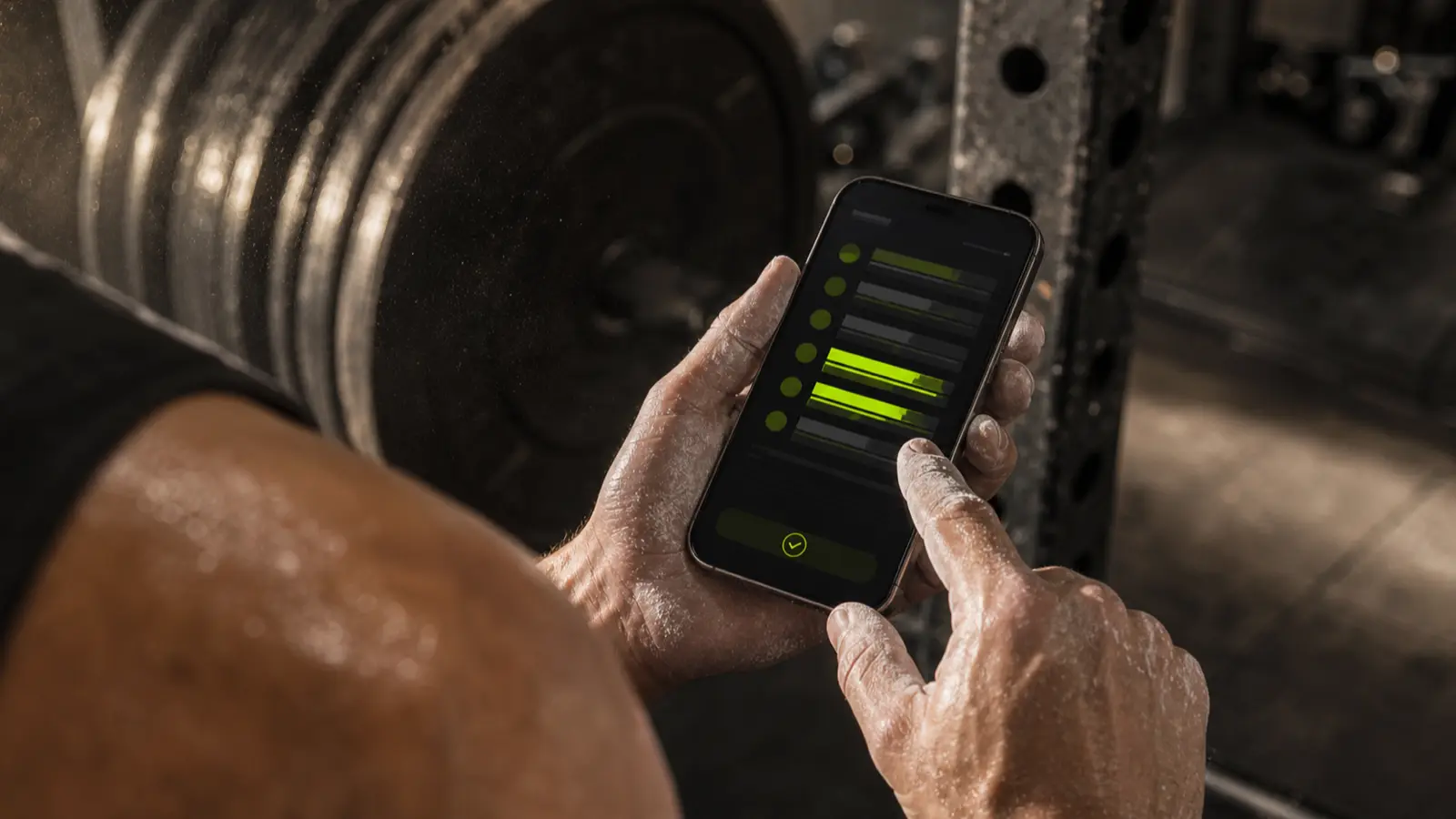
That is the whole reason Ironi exists. You log a set by voice mid-workout, it pre-fills your next target from auto-progression, flags PRs and estimated 1RMs on its own, and shows your streak and a heatmap. All of that is free forever. The AI post-workout reviews are the one paid Pro extra. The point is the same either way: make logging so light you never have a reason to stop.
Takeaway: track the few things that change a decision, keep it frictionless, and the habit will outlive your motivation.