How to Track Workouts: A Simple System That Actually Sticks

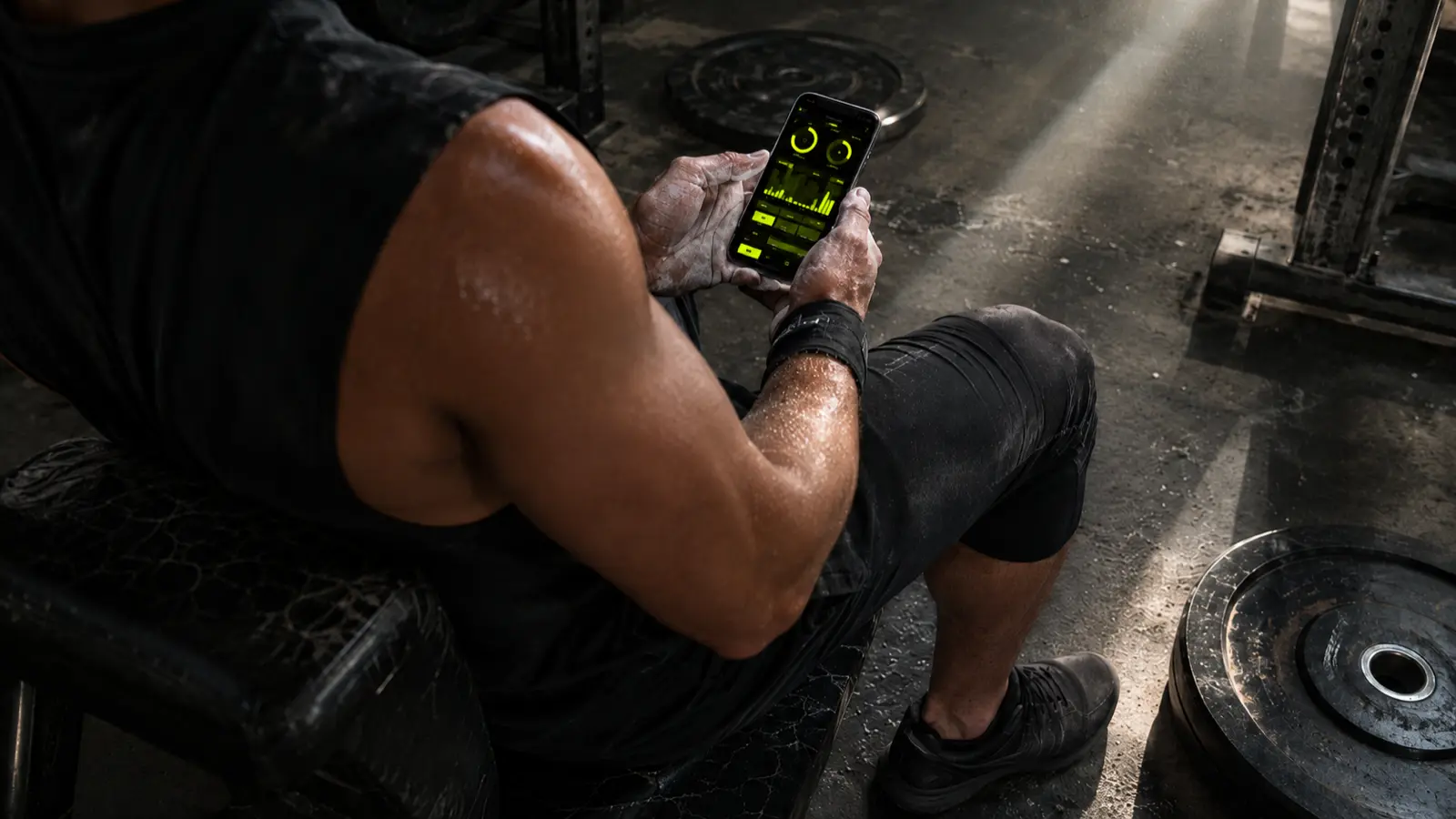
Here is how to track workouts in one line: every session, write down the date, the exercise, and the weight and reps for each set, then beat those numbers next time. That's the whole system. Paper, a spreadsheet, or an app all work. The hard part was never knowing what to write. The hard part is picking a method fast enough that you still use it on a rushed Tuesday in month three. So let's cover what to log, the four ways to log it, and the thing almost every guide skips: what to do with the numbers.
Why tracking workouts beats guessing
You cannot beat last week if you cannot remember last week. Try it: what weight did you row three sessions ago? Most lifters guess, and most guess high. So they load the same weight for months and call it training.
Getting stronger runs on one boring rule, progressive overload: do slightly more than last time, more weight or more reps. "Slightly more" only exists if you know the old number exactly. 52.5kg (116 lb) beats 50kg (110 lb). "Somewhere around 50" beats nothing.
The guy who built Ironi logged a full year in Excel first. The data worked; his lifts went up because every session had a target. What nearly killed the habit was the logging itself, pinching a phone screen to find cell B47 between squat sets. Keep that lesson: the numbers matter, and friction is what makes people quit.
Takeaway: untracked training is educated guessing. Write the numbers down and every session gets a target.
What to track in every workout (and what to skip)
Five fields. That's it:
- Date so you can see the trend later
- Exercise with the variation ("dumbbell bench", not "chest")
- Sets
- Reps per set
- Weight per set, in one unit forever (kg or lb, never both, or your history stops being comparable)
Worth adding once the habit is solid:
- How hard it felt. "Had 2 more reps in me" or "barely got it". Coaches call this RPE or reps in reserve. It tells you whether a flat week was real or just bad sleep.
- Rest time, only if you cut rest to fake progress (more on that below).
- A one-line note. "Left shoulder pinched on set 2" is gold three weeks later.
Skip the rest. Mood scores, bar speed, tempo columns: log ten things per set and tracking becomes a second job you'll quit.
Takeaway: date, exercise, sets, reps, weight. Add a feel note when you're ready. Nothing else until the habit is automatic.
The four ways to track workouts, honestly compared
| Method | Best at | Falls apart at |
|---|---|---|
| Pen and paper | Speed, zero distraction | Trends, backup, reading old pages |
| Spreadsheet | Total control, yours forever | Setup time, logging mid-set |
| Dedicated app | Fast logging, charts done for you | You must be able to export |
| Wearable / smartwatch | Steps, heart rate, cardio | Cannot log strength sets |
Paper works better than people admit. Pre-write the session before you leave home (exercises plus target sets), then only fill in results at the gym. Steal the tally-mark trick: a small mark after each set, so you never stand there wondering if that was set 3 or set 4. The weakness shows up later: your best 5-rep squat from March means flipping pages, and one washing machine ends your archive.
A spreadsheet is a project. Expect an evening or two of setup, and phone-sized cells make mid-set logging slow. In exchange you get a file you own forever. I wrote a full spreadsheet vs app comparison if you're torn.
An app is the default answer for most people now; the next section covers what makes a good one.
Wearables are for cardio. Your watch counts steps and heart rate. It has no idea you benched 80kg (176 lb) for 8, and "strength workout: 45 minutes" is not a log. Pair it with a real method.
Takeaway: paper for minimalists, spreadsheet for tinkerers, app for everyone who just wants to train. A watch alone tracks nothing that makes you stronger.
What makes a workout tracking app worth using
Ignore the feature lists. Judge an app on four things:
- Logging speed. Your last numbers (or your next target) should be pre-filled so you confirm instead of type. Two or three taps per set.
- An exercise library with demos, so "row" means the same movement every time you log it.
- Progress read for you. Charts, personal records, streaks, without you building anything.
- Honest pricing. Plenty of apps are free to download, then paywall your own history after a few workouts. Check what's gated before you commit.
Ironi is the one I can vouch for, because the whole tracker is free forever: logging, voice logging, a 758-exercise catalog with demo images, next-target suggestions, PR detection, streaks and the heatmap. Only the AI coach features are paid. Other trackers can be fine too. Just run them through the same four checks.
Takeaway: pick the app that logs a set fastest and lets you leave with your data. Everything else is decoration.
Log the set before you forget it
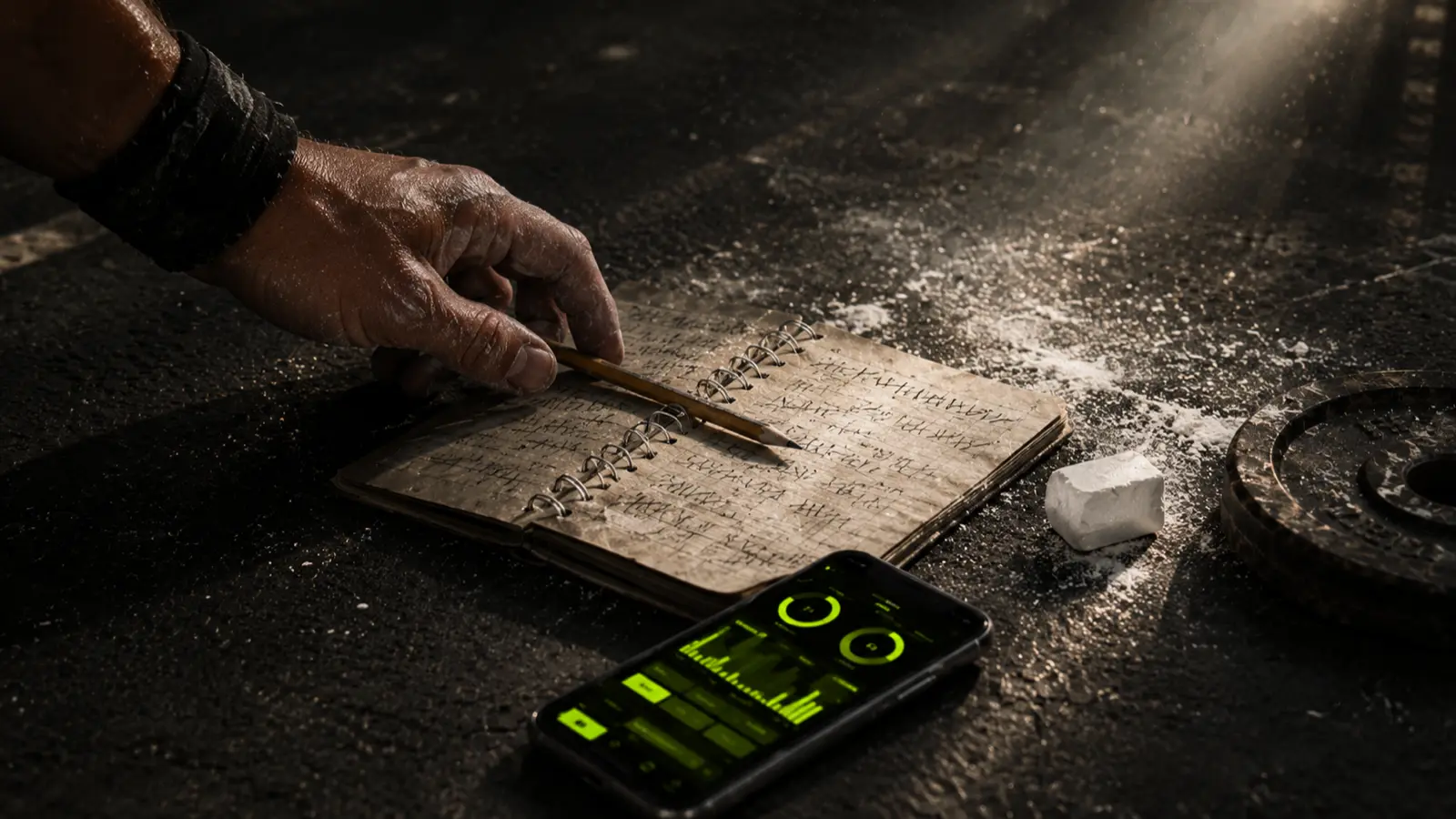
Mid-workout friction is where tracking dies. Nobody quits because writing "60kg x 8" is hard. They quit because doing it 20 times per session, with sweaty hands and someone waiting for the bench, is annoying.
Use the two-second test: from "set finished" to "set logged" should take two seconds. Slower than that and you start skipping sets, then sessions, and the habit is gone by week six.
What passes the test:
- A pre-written paper sheet where you scratch one tally mark
- An app with pre-filled targets, tap plus or minus, done
- Voice logging: say "bench, 60 for 8" and the set fills itself while your hands stay chalked
What fails: hunting for a spreadsheet cell, and any app that makes you search the exercise and type both numbers from scratch.
Takeaway: if logging one set takes longer than two seconds, fix the method before blaming your discipline.
What to do with the numbers

A log you never read is a diary. Three moves turn it into a plan.
Move 1: follow double progression. Pick a rep range, say 8 to 12. Keep the weight fixed and add reps week by week. When you hit 12 clean reps, add about 2.5kg (5 lb) and drop back to 8. Climb again. Your log tells you which step you're on.
Move 2: read stalls early. Same weight and reps for 3 or 4 sessions straight? That's a stall. Drop the weight about 10% for a week, then build back up. Cheaper than grinding into an injury.
Move 3: use estimated 1RM to compare everything. Your one-rep max (1RM) is the most you could lift once. The Epley formula estimates it from any set: weight x (1 + reps / 30). So 80kg for 5 works out to 93.3kg (206 lb), and 70kg for 10 also lands on 93.3kg. Same strength, different day. One number that makes every rep range comparable, which is why PRs are about more than max singles.
Takeaway: the log's job is one decision per exercise per week: add reps, add weight, or back off.
Mistakes that waste the tracking effort
- Logging everything. Ten columns per set burns you out by week three. Five fields.
- Fake progression. Adding weight while your reps get shallower, or cutting rest from 3 minutes to 90 seconds, makes the log lie to you. Same form, same rest, or note the change.
- Never reviewing. Spend two minutes after each session checking next targets. Collecting numbers you never read is effort with no payoff.
- Tools you can't leave. If an app won't export your history, you're renting your own training log.
Takeaway: log less, log honestly, read it weekly, and keep an exit door.
Pick your method and start this week
The 60-second pick:
- Beginner, zero patience for setup → app with preset routines
- Data tinkerer or coach → spreadsheet, or an app that exports
- Distraction-prone minimalist → paper, pre-written
- Chalked hands, fast sessions → an app with voice logging
Then start stupid small:
- Next session, log exactly what you already do. Change nothing about the training.
- After three sessions, cut any field you never looked at.
- Before session four, glance at session one and try to beat one number.
That last step is the whole point. Week two beating week one, on paper instead of in your imagination.
Takeaway: pick the lowest-friction method for your style, log one honest session, and let the numbers pull you forward.